Land, Time, and Presence: How Ranch Living Rewires What Clients Expect from Premium Companionship
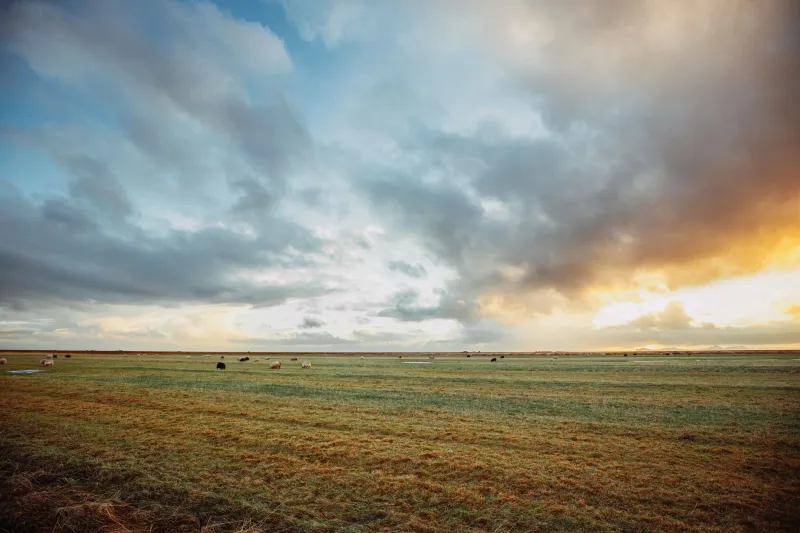
There is a particular quality of silence that only exists on large private land. Not the silence of a city apartment at two in the morning, held together by thin walls and a deliberate effort to be unheard—but a silence that arrives without negotiation, that settles across a property the way weather does, unhurried and total. For those who live within it daily, this silence is not an absence. It is the baseline condition of existence.
This distinction matters enormously when considering what clients shaped by ranch living actually seek from premium companionship. The assumptions that govern urban engagement models—compressed timeframes, a premium placed on efficiency, privacy achieved through anonymity rather than geography—do not translate cleanly to a world measured in sections of land and governed by the position of the sun.
A Different Architecture of Privacy
In most American cities, privacy in the context of companion services is an engineered condition. It requires deliberate infrastructure: carefully selected venues, coded communication, the meticulous management of digital and physical footprints. For the urban client, discretion is an active practice, something assembled piece by piece before an engagement even begins.
The ranch client experiences privacy differently from the ground up. Geographic isolation performs the function that urban clients must construct artificially. A property spanning several thousand acres, accessible by a single private road, already provides the kind of structural separation from public scrutiny that a Manhattan hotel suite requires an entire operational protocol to approximate.
This changes the psychological starting point for engagement. Ranch clients do not arrive at a companion interaction carrying the particular tension that comes from navigating public spaces, managing visibility, or compressing an experience into a window of time that won't raise questions. The land itself has already handled much of that work. What remains is the quality of the experience itself—and that is where expectations become notably demanding.
Time as a Renewable Resource
One of the most significant ways that ranch living reshapes companion expectations is in its treatment of time. Urban professional culture is built on scarcity thinking around time. Hours are parceled, optimized, and accounted for in ways that inevitably bleed into personal life and, by extension, into the way clients approach companion engagements.
Ranch living operates on an entirely different temporal logic. The rhythms of land management, livestock, and seasons impose their own structure, but they are not the compressed, quarter-hour increments of a corporate calendar. There is a willingness—even an expectation—that meaningful experiences will unfold at their own pace. A conversation that takes three hours to arrive at its most honest moment is not considered inefficient. It is simply how things are allowed to develop.
For premium companions working with ranch-based clients, this temporal generosity represents both an opportunity and a calibration challenge. The expectation is not for a performance delivered within a set window, but for genuine presence sustained across an extended and often unstructured period. The companion who arrives equipped for a two-hour social engagement and finds herself invited to stay for an evening meal, a walk at dusk, and a conversation that extends well into the night is experiencing the ranch effect in its most direct form.
Authenticity Over Atmosphere
Urban companion engagements frequently take place within environments specifically chosen for their atmosphere—upscale restaurants, boutique hotels, cultural events that provide both activity and social cover. These settings do real work in structuring an interaction, providing shared reference points and a kind of ambient legitimacy.
The ranch setting strips most of that scaffolding away. There is no theater of the high-end restaurant, no curated playlist, no ambient lighting chosen by an interior designer. What replaces it is something considerably more demanding: the unmediated quality of a person's actual presence.
Clients shaped by ranch living tend to be acutely sensitive to performance versus authenticity. Working with land, animals, and weather conditions that respond only to reality—never to presentation—trains a particular kind of perceptiveness. A companion who is skilled at projecting warmth within a structured social setting may find that a different set of capacities is being evaluated in this context. Groundedness, intellectual honesty, the ability to be genuinely comfortable with quiet—these qualities register more clearly when the surrounding environment is not doing any of the conversational heavy lifting.
The Companion as Guest, Not Service
Perhaps the most culturally specific dimension of the ranch client experience is the framing through which companion engagement tends to be understood. In urban contexts, the transactional architecture of premium companionship, however refined, is generally understood by both parties as a structured service relationship.
On a ranch, the operative social framework is more likely to be that of hospitality. The client who has extended an invitation onto private land has, in the logic of that environment, made a significant gesture. The companion is, in a meaningful cultural sense, a guest. This is not merely a semantic difference—it carries genuine behavioral implications. The expectation of reciprocal respect, of treating the property and its rhythms with consideration, of engaging with the reality of the client's actual life rather than a curated version of it, all follow naturally from this framing.
Companions who understand this distinction—who can move through a working ranch environment with ease, engage authentically with the details of that life, and receive hospitality with the grace it deserves—are offering something that no urban engagement model can replicate.
What This Means for the Industry
The ranch effect is not a niche consideration for a narrow segment of the American companion market. Across the Mountain West, the Great Plains, the Texas Hill Country, and the rural stretches of the Pacific Northwest, there exists a substantial population of accomplished, private individuals whose daily lives are defined by the qualities described here. They are not seeking an urban experience exported to a rural setting. They are seeking companions capable of inhabiting their world on its own terms.
For platforms and companions attentive to this reality, the opportunity is considerable. The client shaped by open land and genuine solitude is not difficult to serve—but they are impossible to impress with approaches designed for a different geography. Meeting them where they actually live, in every sense of that phrase, is the essential first step.